
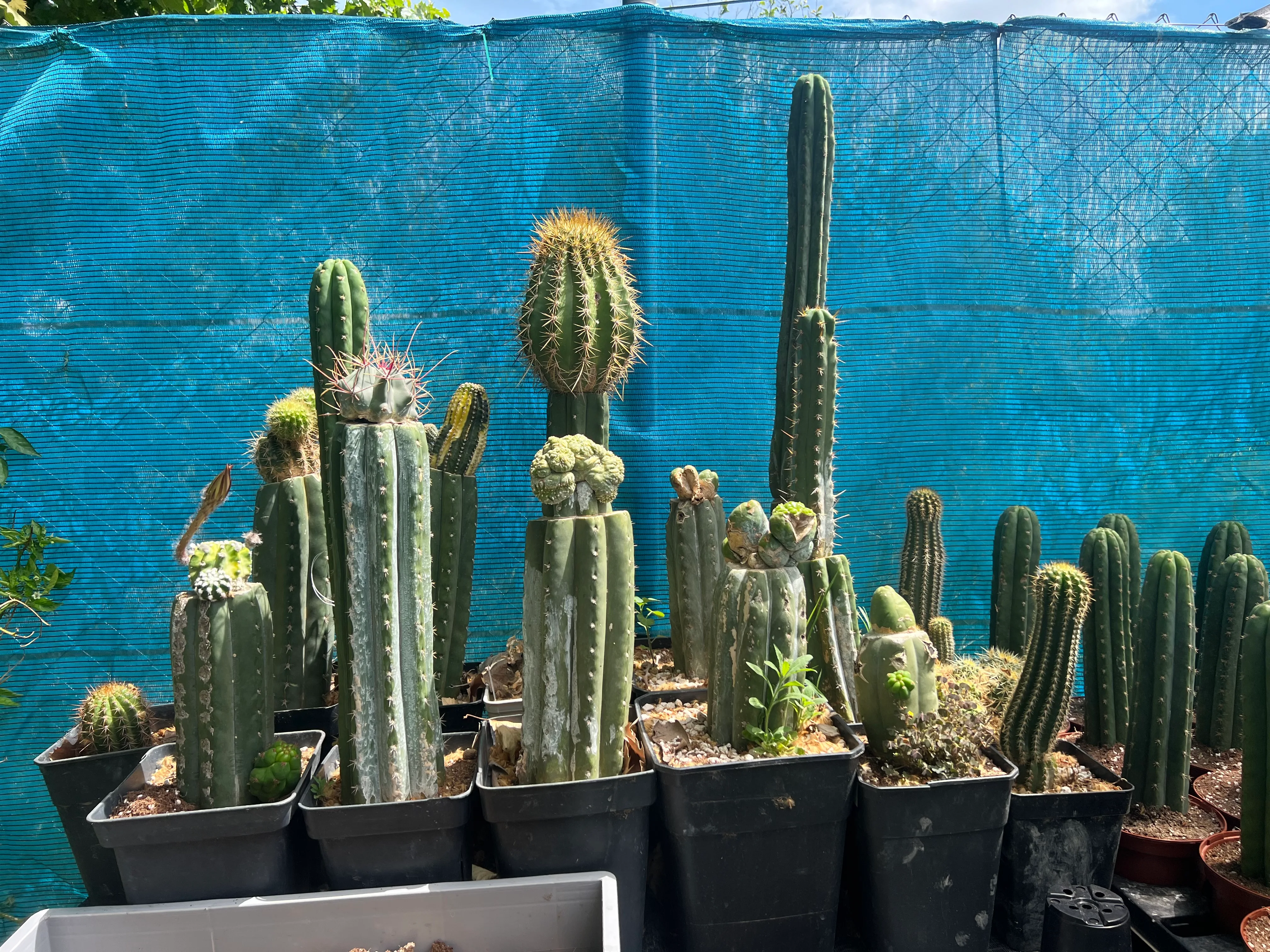
Guía para seleccionar Trichocereus como portainjertos ideales
Complete Guide to Selecting Trichocereus as Ideal Rootstocks
Trichocereus is a genus of cacti native to the mountainous regions of South America, with a notable presence in countries such as Bolivia, Chile, Ecuador, and Peru. These cacti, known for their robustness and ability to adapt to different climatic conditions, have gained popularity not only as ornamental pieces but also as rootstocks in advanced gardening and cactus cultivation techniques. In this guide, we will explore the reasons why Trichocereus is an excellent choice as a rootstock and how to select them properly.
Why Choose Trichocereus as Rootstocks?
- Fast Growth
One of the most attractive aspects of Trichocereus is its rapid growth. It is a columnar cactus that can reach heights of up to 6 meters under appropriate conditions. This fast growth is crucial when looking for a rootstock that can efficiently provide support and nutrients to the grafted plant.
- Adaptability to Different Climates
Trichocereus has a remarkable ability to adapt to various temperatures and environmental conditions. From the heights of the Andes, where they face severe climates, to more temperate zones, these cacti continue to thrive, making them flexible for grafting in different environments.
- Disease Resistance
This species has proven to be resistant to many pests and diseases that commonly affect other cacti, which is an essential characteristic when selecting a robust rootstock.
- Compatibility with Multiple Varieties
Trichocereus is highly compatible with a wide range of cacti, from the most common to the most exotic varieties. This is due to its compatible sap, which facilitates nutrient exchange between the rootstock and the graft.
How to Select the Right Trichocereus
Step 1: Species Identification
Identify the Trichocereus species that best suits your needs. Some of the most commonly used species are:
- Trichocereus pachanoi (San Pedro): Known for its traditional use and robustness, it is ideal for grafts that require rapid height development.
- Trichocereus bridgesii: Recommended for drier soils and extreme conditions.
Step 2: Plant Health Assessment
It is crucial to select a cactus free of pests and diseases. Observe the green tone of the skin, avoid plants with brown or black spots, and ensure there are no signs of rot.
Step 3: Environmental Considerations
Consider the environment where you intend to perform the graft. Although Trichocereus is adaptable, providing optimal lighting and temperature conditions will promote better growth for both the rootstock and the grafted plant.
Step 4: Verify Rib Structure
Specimens with prominent and well-formed ribs are usually more suitable for grafting. These characteristics contribute to improved graft anchorage and aid in the nutrient exchange process.
Conclusion on Using Trichocereus as Rootstocks
The choice of Trichocereus as rootstocks remains a highly valued practice among gardeners and farmers due to its multiple benefits. Its fast growth, resilience, and compatibility make it an unbeatable option. By selecting the right Trichocereus and understanding its care and maintenance, you will ensure a successful graft and a healthy, vigorous mother plant.
Promoting the use of Trichocereus is not only a smart choice to maximize grafting efficiency but also encourages sustainable and adaptive gardening practices, essential to face the challenges of climate change in modern horticulture.