
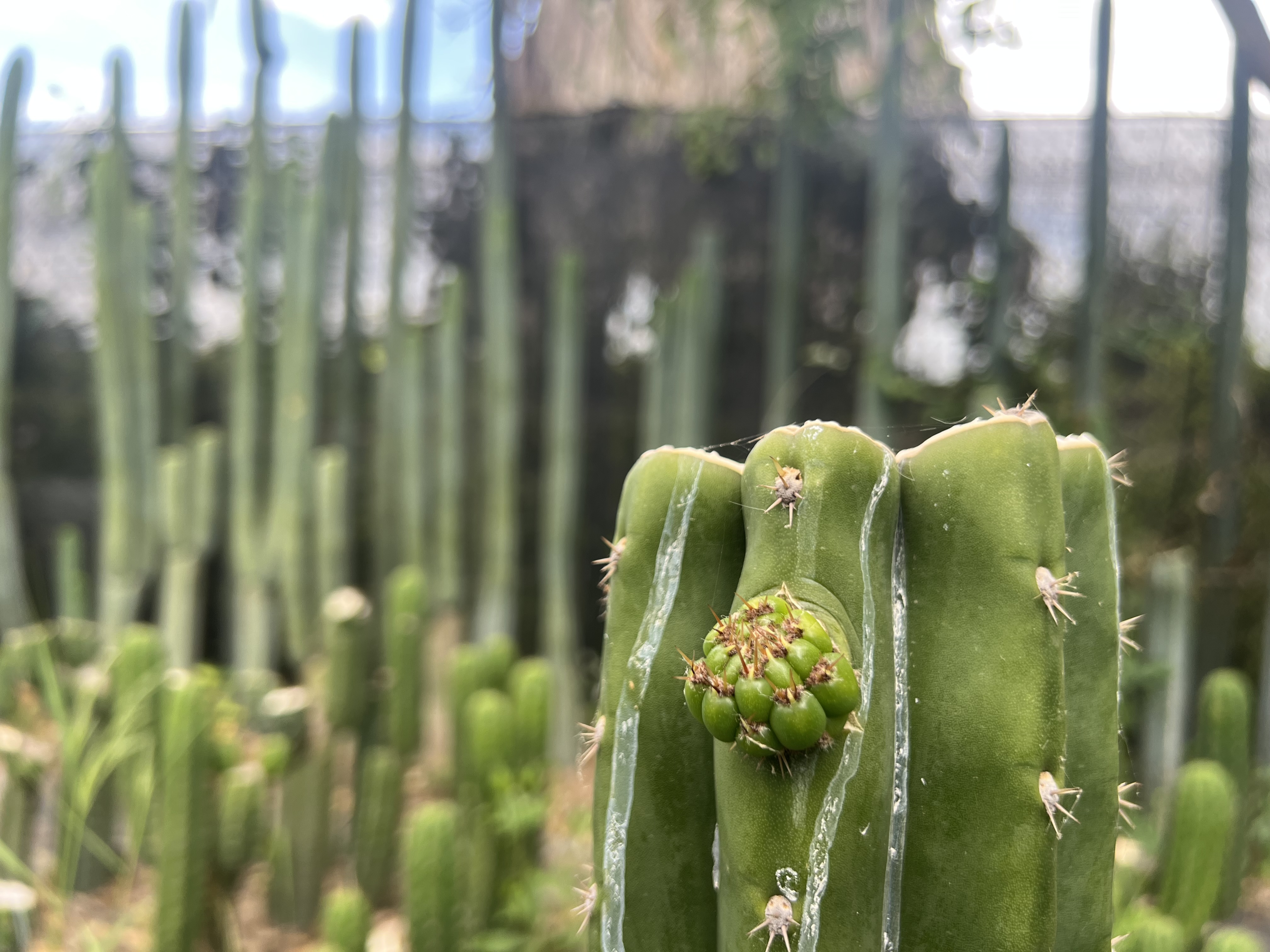
Trichocereus: guide to identifying invisible pests
Guide to Identifying Invisible Pests in Trichocereus
In the professional cultivation of Trichocereus (syn. Echinopsis for many authors), a critical part of success is timely detection of "invisible" pests: tiny, subterranean, or cryptic organisms that go unnoticed until damage becomes evident. This technical guide from TRICHOLAND compiles diagnostic criteria, differential signs, and integrated management protocols for the most common and hard-to-see pests in Trichocereus, both in collections and nursery production. The goal is for you to confirm or rule out their presence without a professional microscope, apply safe corrective measures, and scale control effectively and sustainably.
Early Signs to Detect Invisible Pests in Trichocereus
- Bronzing or "russeting": loss of bright green, with fine browning and rough or corky surface texture. Typical of flat or false mites (Brevipalpus).
- Silvered or matte with fine speckling: dull, "sanded" appearance, often with black dots (droppings). Compatible with thrips.
- Diffuse chlorotic spots that expand without a defined pattern, sometimes accompanied by slight epidermal sinking: compatible with mites (Tetranychus, eriophyids).
- Deformation of the apex, "stunted" shoots or abnormal branching (witches’ broom type): indicative of eriophyid mites or broad mite (Polyphagotarsonemus latus).
- Growth halt without apparent cause, general yellowing and loss of turgor that does not improve with watering: suspicion of root mealybug (Rhizoecus) or root problems.
- Ribs that "fade" (soft tissue due to excess nitrogen) and microlesions: facilitate establishment of mites and mealybugs.
- Ants prowling around the pot or stem base: often associated with mealybugs (feeding on their honeydew or protecting them).
- Absence of honeydew or sooty mold with severe damage: points towards mites (do not excrete honeydew), not aphids or aerial mealybugs.
Quick Tools and Methods for Pest Diagnosis in Trichocereus
- 10–20× magnifying glass: indispensable. Check apices, areoles, grooves between ribs, and the plant’s neck.
- "Tap test": place a white card under the stem and gently tap; observe with magnifier if small reddish or brownish moving dots (mites) or elongated ones (thrips) fall.
- Clear adhesive tape: press on the suspicious area, stick it on a white slide and examine with magnifier; useful to see mites and thrips.
- Sticky traps: yellow (general) and blue (thrips), placed at rib height; check weekly.
- Root inspection: if decline without cause, remove the pot; look for white cottony masses on roots or neck (root mealybug).
- Washing-sieving of the root ball in a bucket with warm water and mild soap; filter water through a white mesh to detect root mealybugs.
- Homemade Berlese funnel (advanced): for soil; a light or heat source drives microarthropods into a collector with alcohol.
- Macro photography with phone and magnifier: allows weekly comparison and requesting a second technical opinion.
Most Common Invisible Pests in Trichocereus: Identification and Management
1) Root Mealybug (Rhizoecus spp. and relatives)
Why it is "invisible": lives buried or at the neck, protected by substrate and root debris; not always visible on the surface.
Symptoms:
- Plant that "stops", yellows, and loses vigor despite correct watering and fertilization.
- Stem moves in the pot (damaged roots, weak anchorage).
- Ants in the container; on roots, white cottony masses and small grayish oval insects.
Confirmation: remove the plant, shake and wash roots; observe mealybugs on fine roots and neck under magnifier.
Management:
- Physical shock: moderate pressure washing of roots plus bath in soapy solution or with horticultural oil at 1% (never in full sun or heat).
- Repotting into new substrate, disinfected pot. Remove 100% of old substrate.
- Systemic drench where authorized for ornamentals: active ingredients registered against mealybugs (check local regulations and label). Repeat in 14–21 days.
- Biological control: Cryptolaemus montrouzieri (mealybug predator) and soil mites (Stratiolaelaps and Geolaelaps) as auxiliaries.
- Ant control with specific baits to cut protection and mobility of the pest.
2) Two-Spotted Red Mite (Tetranychus urticae)
Invisible to the naked eye when population is low; thrives with heat and low humidity.
Symptoms:
- Loss of shine; fine yellowish mottling; brown "sand" texture to the touch.
- Subtle webs between areoles in heavy attacks (not always present).
Confirmation: tapping on card; see reddish or brown dots moving. 20× magnifier reveals individuals and eggs.
Management:
- Cultural: gentle morning showers in summer outdoors; slightly increase relative humidity in greenhouse with ventilation; avoid excess nitrogen.
- Biocontrol: Phytoseiulus persimilis (fast on outbreaks), Neoseiulus californicus and Amblyseius andersoni for preventive management.
- Specific acaricides rotating IRAC groups (e.g., abamectin, bifenazate, etoxazole, hexythiazox, spiromesifen, spirodiclofen) according to local registration; add appropriate wetting agent and cover grooves and areoles. Avoid oils at high temperatures.
3) False or Flat Mites (Brevipalpus spp.)
Profile: extremely small, no webbing; cause russeting or corkiness and progressive browning.
Symptoms:
- Brown, rough areas advancing from shaded zones and inner ribs.
- Visual loss of turgor without collapse; chronic attacks leave permanent crust.
Management:
- Detailed monitoring with magnifier during cool hours.
- Biocontrol: Amblyseius swirskii and Neoseiulus californicus as preventives in controlled environments.
- Contact and translaminar acaricides effective in rotation (see list above); apply in 2–3 passes every 7–10 days to cover hatching.
4) Eriophyid Mites (family Eriophyidae)
Profile: microscopic, worm-shaped; attack meristematic tissues and areoles.
Symptoms:
- Growth deformation, "swollen" areoles, short abnormal shoots (witches’ broom type), fine superficial scars.
- In young plants, "wrinkled" apex appearance without water stress cause.
Management:
- Remove deformed microshoots in localized attacks.
- Rotate ovicidal and juvenile acaricides and translaminar ones (etoxazole, hexythiazox, abamectin), with outstanding coverage of the apex.
- Biocontrol: Amblyseius swirskii and Neoseiulus cucumeris as preventives in temperate climates.
5) Broad Mite (Polyphagotarsonemus latus) and Cyclamen Mite
Profile: apex pests; tiny; damage young tissues.
Symptoms:
- Thickened apices, halted and "wrinkled" growth, areoles emitting deformed spines.
- In rooting cuttings, stops emission of aerial or areolar roots.
Management:
- Environment: avoid chronically high relative humidity and stagnant heat without ventilation in greenhouse.
- Acaricides or miticides compatible with tarsonemids (abamectin, systemic spirotetramat where authorized, etc.).
- Biocontrol: Neoseiulus cucumeris and Amblyseius swirskii.
6) Thrips (Frankliniella occidentalis, Thrips tabaci)
Profile: slender, very fast; hide in grooves and flowers.
Symptoms:
- Silvered or "frosted" surface, with black dots (excrement) and scraping lines.
- Mild apex deformation; severe aesthetic damage in seedlings and young ribs.
Confirmation: blue traps; tapping reveals elongated yellow or brown insects.
Management:
- Hygiene and insect-proof screens on greenhouse openings; remove old flowers.
- Biocontrol: Orius laevigatus and O. insidiosus (adult and nymph predators), Amblyseius swirskii or Neoseiulus cucumeris for juvenile stages.
- Insecticides rotating IRAC: spinosad, cyantraniliprole, acetamiprid or others authorized for ornamentals; apply alternating every 5–7 days with wetting agent.
7) Camouflaged "Scale" Mealybugs (Diaspidids and Coccids)
Profile: hard or waxy plates attached to epidermis, stem-colored; mobile nymphs almost invisible.
Symptoms:
- Yellowish circular spots evolving into brown patches; sometimes with honeydew or sooty mold (in coccids).
- General decline if neck colonization occurs.
Management:
- Manual removal with cotton swab and 70% isopropyl alcohol in initial foci.
- Mild horticultural oils in cool, shaded conditions; avoid burns in full sun or heat.
- Systemics or IGRs (e.g., buprofezin, pyriproxyfen, spirotetramat) according to local registration; repeat and alternate modes of action.
- Biocontrol: Cryptolaemus, Anagyrus, and Metaphycus in professional programs.
Differentiating Pest from Disease or Physiopathy in Trichocereus
- Sunburn: well-defined corky-brown patches after abrupt exposure to full sun. No speckling or droppings. Prevention: gradual acclimation with 40–50% shade cloth.
- Edema: blisters or corkiness from watering with cold substrate or hydration spikes; does not progress with biocontrol or insecticides.
- Nutritional deficiencies: regular interveinal chlorosis (iron, magnesium) without scraping or rough browning. Adjust irrigation pH and chelates.
- Fungi and bacteria: sunken, wet spots (bacteriosis); necrosis with halo or pycnidia (anthracnose); rot at neck or root with bad odor. Management: sanitation, authorized fungicides, and irrigation adjustment.
- Viruses (e.g., Cactus virus X): mosaics, rings, mottling unresponsive to treatments; no cure. Isolate or discard affected material to protect the rest.
Integrated Pest Management (IPM) for Trichocereus Cultivation
1) Prevention and Hygiene in Trichocereus Nurseries
- Quarantine of 3 to 4 weeks for any incoming material; inspections with magnifier.
- Disinfection of benches, tables, and tools; use of new substrate and clean pots.
- Balanced water and nutrition; avoid excess nitrogen that softens tissues.
- Environment: active ventilation in greenhouse; avoid microclimates of extreme dry heat (mites) or stagnant high relative humidity (tarsonemids).
2) Monitoring and Thresholds for Pest Control in Trichocereus
- Weekly inspections during growing season; biweekly during dormancy.
- Sticky traps: at least 1 per 10 m², placed near doors and windows.
- Photographic records and batch sheets to make timely decisions.
3) Biocontrol as the Backbone of Pest Management
- Phytoseiulus persimilis, Neoseiulus californicus, Amblyseius andersoni, and Amblyseius swirskii for mite control.
- Orius and Amblyseius for thrips management.
- Cryptolaemus and Anagyrus for mealybug control.
- Soil: Stratiolaelaps and entomopathogenic nematodes (Steinernema feltiae) as biological support.
4) Smart Chemical Interventions in Trichocereus
- Use registered active ingredients for ornamentals and cacti in your country; always follow the label.
- IRAC rotation to avoid resistance; apply 2 to 3 times per cycle with appropriate intervals.
- Wetting agent and complete 360° coverage of ribs and areoles; avoid applications in sun or high temperatures to minimize phytotoxicity.
- Avoid oils and abamectin during heat waves and full sun; perform tests on few plants before mass application.
Practical Protocols for Pest Control According to Symptom in Trichocereus
If You Suspect Root Mealybug
- Suspend fertilization and watering for 48 hours; carefully remove pot and wash roots.
- Remove old substrate; prune dead roots; brief bath in soapy water.
- Replant in new, well-draining substrate; apply drench with authorized product or introduce Stratiolaelaps as biological support.
- Control ants with bait and remove heavily infested pots if not valuable.
If There Is "Russeting" Without Webbing
- Check with magnifier for Brevipalpus; release Amblyseius swirskii or Neoseiulus californicus as preventives.
- Apply translaminar acaricide and repeat in 7–10 days; rotate modes of action.
- Improve ventilation and reduce water stress.
If You Observe Silvering and Black Dots
- Confirm thrips presence with blue traps and tapping.
- Release Orius and Amblyseius swirskii; alternate spinosad and cyantraniliprole according to label.
- Remove wilted flowers and clean benches.
If the Apex Deforms Without Apparent Cause
- Assess presence of eriophyids or tarsonemids; remove severely deformed tissue.
- Apply ovicidal or juvenile acaricide on meristem; repeat as indicated.
- Adjust climate: avoid high relative humidity without air movement.
Surveillance Calendar for Pests in Trichocereus (Northern Hemisphere)
- March–April: pest reactivation; place sticky traps; first release of beneficial mites.
- May–August: peak of mites and thrips. Weekly inspections with magnifier; gentle showers; acaricide rotation if thresholds exceeded.
- September–October: reduce nitrogen; prioritize potassium and silicon to harden tissue; control root mealybug before dormancy.
- November–February: minimal watering in cold; inspections every 3–4 weeks for root mealybug and scales on neck.
Common Mistakes That Favor Invisible Pests in Trichocereus
- Not using a magnifier: delays diagnosis by weeks.
- Heavy watering with cold substrate: predisposes to edema and rots that confuse diagnosis.
- Excess nitrogen: soft tissues, more attractive to pests.
- Applying oils in the sun: risk of burns and corkiness.
- Not rotating modes of action: favors resistance in mites and thrips.
Quick FAQ on Pests in Trichocereus
- How to distinguish mites from thrips without a microscope? Tap test on card: mites are round dots moving slowly; thrips are elongated and run quickly. Silvered surface with black dots indicates thrips; rough "russeting" indicates mites, especially Brevipalpus.
- Is there a pest if I don’t see honeydew? Yes; mites do not produce honeydew and cause severe damage without sooty mold.
- Can I use potassium soap? Useful against aerial mealybugs and thrips nymphs as support. In Trichocereus, test on a small area first; do not apply in sun or heat.
- What to do with a plant showing suspicious mosaic? Isolate it; if viral infection is confirmed, discard to protect the rest. Disinfect tools.
- How often to inspect? Weekly during growth; monthly during dormancy. Always before and after movements or repotting.
Quick Reference Sheet: Symptoms and Main Suspected Pest in Trichocereus
- Growth halt, yellowing, and ants → Root mealybug.
- Silvering with black dots → Thrips.
- Progressive rough browning without webbing → False mites (Brevipalpus).
- Fine mottling with possible webbing → Red mite (Tetranychus).
- Deformed apex or witch’s broom shoots → Eriophyids or broad mite.
TRICHOLAND: Technical Support and Scalable Solutions for Trichocereus
At TRICHOLAND we work with specific Integrated Monitoring protocols for Trichocereus, combining magnifier inspection, sticky traps, releases of natural enemies, and rotation plans of active ingredients compatible with ornamental cacti. We offer:
- Advice on quarantine and hygiene for nurseries and collections.
- Design of biocontrol programs with predatory mites, Orius, and Cryptolaemus.
- Recommendations on substrates, fertigation, and climate management that minimize pest risk.
- Diagnostic checklists and monitoring calendars adapted to your climate.
If you need help confirming a diagnosis or developing an IPM plan for your collection or production, the TRICHOLAND technical team is at your disposal.