
TRICHOCEREUS BRIDGESSI: Complete Guide. Everything You Need to Know
Trichocereus bridgesii (Echinopsis lageniformis): Complete Guide for Cultivation, Identification, and Professional Management
Trichocereus bridgesii (widely treated in modern literature as Echinopsis lageniformis; also commercially known as “Bolivian torch”) is a columnar cactus native to Bolivia, highly valued for its elegant stature, vigor, fragrant nocturnal flowering, and excellent adaptation to dry high-altitude climates. At TRICHOLAND we produce selected material for nurseries and landscaping, with special attention to uniformity, health, and performance under intensive cultivation.
This guide compiles expert management for advanced enthusiasts and professionals: taxonomy, identification, habitat, substrates and high-performance irrigation, nutrition, cold tolerance, propagation, plant health, differentiation from related species, and an annual work calendar.
Taxonomy and Names of Trichocereus bridgesii
Genus: Trichocereus (often included in Echinopsis in current treatments).
Commonly accepted name: Echinopsis lageniformis (syn. Trichocereus bridgesii).
Synonyms and affinities: some sources include Echinopsis scopulicola and local forms as synonyms or close relatives; treatment varies by author.
Common names: “Bolivian torch”; regional vernacular names recorded in Bolivia.
Common misspelling: “bridgessii”. Correct form: bridgesii.
Origin and Natural Habitat of Trichocereus bridgesii
Distribution: Departments of La Paz, Cochabamba, Tarija, and Chuquisaca (Bolivia).
Altitude: approx. 1,000–3,300 m a.s.l., on slopes and ravines with well-drained rocky soils.
Climate: marked dry/wet seasons, high radiation, wide daily temperature range, and seasonal precipitation.
Description and Identification of Trichocereus bridgesii
Habit: shrubby to tree-like, occasional branching; 2–5 m tall under ideal conditions.
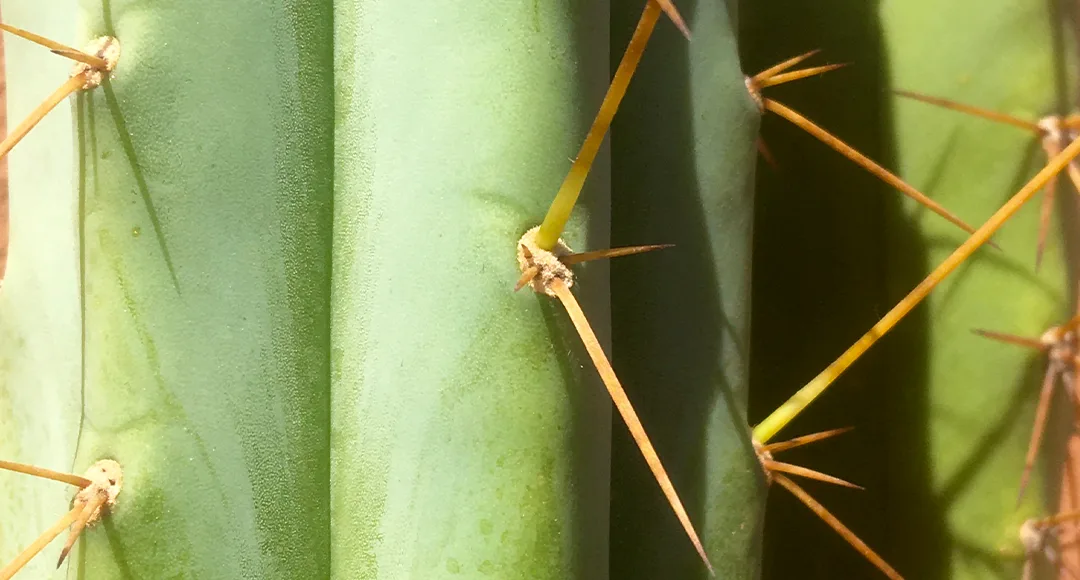
Stems: light green to glaucous-blue, 15–20 cm diameter, 4–8 well-defined ribs.
Areoles: large, spaced ~1.5–3 cm apart.
Spines: 2–6 per areole, uneven, honey to brown color, length ~0.1–7 cm (more robust on mature plants).
Flowers: white, large, fragrant, nocturnal; long floral tube; ~15–20 cm length.
Fruits: spherical, with trichomes; ~4–6 cm length.
Professional Cultivation Requirements for Trichocereus bridgesii
Light and Exposure for Cultivating Trichocereus bridgesii
Light: full sun after gradual acclimation. In nursery, 30–40% shade mesh for young or newly transplanted specimens for 2–3 weeks.
Indoor/greenhouse: target PPFD 250–400 µmol/m²/s for maintenance; 400–600 for rapid growth with proper ventilation and nutrition.
Wind: tolerant; stake until base thickens in exposed locations.
Temperature and Cold Tolerance in Trichocereus bridgesii
Optimal: 18–30 °C (active growth above 15 °C in substrate).
Dormancy: below 10–12 °C reduces activity; keep drier.
Frost: safe cultivation recommended in USDA zones 9a–11. With expert management, mature specimens in very well-drained substrate can tolerate brief drops down to −4/−6 °C when dry. Avoid frost with wet soil.
Professional Substrate for Pots and Containers of Trichocereus bridgesii
Goal: rapid drainage, high aeration, and moderate retention for deep, spaced watering.
60–70% mineral fraction: pumice/pozzolana 2–8 mm, volcanic gravel, or coarse washed silica sand.
30–40% organic fraction: fibrous blond peat or coconut (medium mix) + 10–15% screened mature compost.
Amendments:
Dolomite/Calcium carbonate: 2–4 g/L if acidic peat is used (provides Ca/Mg and stabilizes pH).
Mycorrhizae and Trichoderma in propagation for root vigor.
Silicon (diatomaceous earth powder/orthosilicic acid) in microdoses for tissue firmness.
Target pH: 5.8–6.5 (tolerance ~5.5–7.2). Avoid compacted or saline substrates.
Drainage: pots with multiple holes or slotted; a layer of coarse material at the base does not replace a proper substrate.
Proper Irrigation for Trichocereus bridgesii in Nursery and Cultivation
Spring–summer: deep watering, allowing 50–80% of substrate volume to dry between irrigations. In pots: 1 watering every 5–10 days depending on temperature, radiation, wind, container size.
Autumn: progressively space out; prioritize light watering on mild days if residual heat persists.
Winter: in cold climates, keep almost dry. In frost-free areas, very occasional and light watering.
Water quality: low EC (0.75 dS/m) and moderate alkalinity. If water is hard, acidify to pH 5.8–6.2 to prevent chlorosis.
Nutrition and Fertigation for Trichocereus bridgesii in Production
Working dose during active growth: 50–100 ppm N per application every 2–4 irrigations with formulations low in N and high in K (e.g., 3-5-7 / 4-7-8) + chelated micronutrients (Fe, Mn, Zn).
Conductivity in solution: 0.8–1.2 mS/cm at growth peak.
End of summer: reduce N; prioritize K, Ca, and Si for tissue maturation.
Salt leaching: every 6–8 weeks, abundant watering with clear water.
Avoid urea as main N source; prefer ammonium nitrate/calcium nitrate.
Pots, Transplanting, and Structure for Professional Cultivation
Container: deep and with great lateral aeration; excellent performance in slotted pots/air-pots.
Transplant: when root ball colonizes >80% of volume (approx. every 2–3 years). Best time: late spring–summer.
Staking: cane/rod and elastic ties to avoid strangulation until base consolidates.
Professional Propagation of Trichocereus bridgesii in Nursery
Cuttings: Preferred Method in Nursery for Trichocereus bridgesii
Selection: healthy segments of 20–40 cm with firm tissues.
Cut: clean and slightly beveled, with disinfected tool.
Curing: vertical, bright shade and ventilation 10–21 days until dry callus. In humid climates, dust sulfur on the cut.
Rooting: place on very mineral and barely moist substrate; first moderate watering after 2–4 weeks or upon seeing roots (>2–3 cm).
Propagation by Seeds of Trichocereus bridgesii
Substrate: fine and sterile (e.g., 50% fine silica sand + 50% sifted peat/coco). Disinfect by heat.
Sowing: superficial; high humidity under dome; intense diffuse light.
Temperature: 22–28 °C. Germination usually in 7–21 days.
Management: progressive ventilation from 2nd–3rd week; first very diluted nutrition at one month.
Advanced Grafting for Trichocereus bridgesii
Speeds seedling growth or rescues valuable material. Rootstocks: Myrtillocactus geometrizans, Trichocereus spachianus, and other vigorous Trichocereus.
Pruning, Training, and Habit Management in Trichocereus bridgesii
Topping to induce branching at desired height (ideal for landscaping specimens).
Health: make cuts in dry, warm weather; dust sulfur and keep dry until callus forms.
Renewal: segment aged columns and replant bases to rejuvenate.
Common Pests and Diseases in Trichocereus bridgesii
Frequent Pests in Cultivation of Trichocereus bridgesii
Mealybugs (aerial and root): inspect areoles and collar. Control: 70% isopropyl alcohol, potassium soap, and horticultural oil in rotation. For roots: wash root ball and transplant to clean substrate. In production, consider biological control (Cryptolaemus, Anagyrus).
Red spider mite: common with heat and low relative humidity. Prevention: ventilation, morning showers outdoors in summer, and light oils; in greenhouse, Phytoseiulus persimilis.
Thrips/scales: monitoring and targeted treatments authorized according to local regulations.
Slugs and snails: physical barriers and perimeter baits.
Frequent Diseases in Trichocereus bridgesii
Collar/root rots due to excess moisture and cold: sanitize to healthy tissue, disinfect tools, apply sulfur/copper on cut and cure dry. Adjust irrigation and drainage.
Leaf spots (anthracnose, etc.): improve aeration; preventive contact fungicides where authorized; avoid nocturnal stem wetting.
Iron chlorosis: typical with hard water pH>7. Correct irrigation pH and apply Fe-EDDHA.
Common Problems and Solutions in Cultivation of Trichocereus bridgesii
Etiolation: insufficient light or excess nitrogen. Gradually increase irradiance and balance fertilization.
Sunburn: after abrupt changes to full sun. Acclimate 2–3 weeks with shading.
Edema: excessive watering with cold substrate. Water during warm hours and improve drainage.
Cracking: hydration spikes after prolonged drought. Stabilize frequency and volumes.
Annual Cultivation Calendar for Trichocereus bridgesii (Northern Hemisphere)
Mar–Apr: resume watering; first mild fertilizations; transplanting and cutting.
May–Aug: growth peak. Regular deep watering; complete nutrition; weekly phytosanitary control.
Sep: reduce nitrogen; prioritize potassium, calcium, and silicon; check stakes before storms.
Oct–Nov: space out watering; prepare dry overwintering; protect from cold rains.
Dec–Feb: dormancy; keep almost dry; monitor root mealybugs.
Differentiation of Trichocereus bridgesii from Related Species
T. pachanoi: generally fewer spines (0–7 short spines), greener color, 6–8 more rounded ribs. Bridgesii usually has longer and more pronounced spines.
T. peruvianus (E. peruviana): high variability; clones more glaucous with intermediate to long spines; areoles somewhat more spaced in many cultivars.
T. macrogonus: often spiny (up to ~20 spines/areole, with long central spines), more slender habit in some clones.
E. scopulicola: considered by some as close to lageniformis; typically fewer spines and smoother appearance. Subtle differences and subject to taxonomic debate.
Notable Forms and Cultivars of Trichocereus bridgesii
Monstrous/crested (TBM, cristate): slower growth and unusual morphology; highly prized in collections. Require even more mineral substrates, very measured watering, and extra protection from cold rains.
Other collector-interest cultivars: lines with variations in spination, coloration, and vigor.
Landscape and Design Use with Trichocereus bridgesii
Placement: slopes, rock gardens, and xerophytic beds. Leave 80–120 cm between plants for natural growth and branching.
Soil: plant on mounds/terraces 15–30 cm high for drainage. Drip irrigation spaced in dry/hot climates.
Combinations: Agave, Dasylirion, Yucca, xerophytic grasses, Tephrocactus.
Summary Technical Sheet of Trichocereus bridgesii for Nurseries
Origin: Bolivia (La Paz, Cochabamba, Tarija, Chuquisaca).
Altitude: 1,000–3,300 m a.s.l.
Height: 2–5 m in mature cultivation.
Stem: 15–20 cm diameter; 4–8 ribs.
Flower: white, nocturnal, fragrant, 15–20 cm.
Substrate: very well-drained; pH 5.8–6.5.
Irrigation: deep and spaced in heat; almost dry in cold.
Fertilization: low N, high K, with micronutrients; 50–100 ppm N per event during season.
Zones: USDA 9a–11 (occasional tolerances below 0 °C when dry and with expert management).
Best Practices for Nursery Production of Trichocereus bridgesii
Density: benches at 30–40 cm between 20–25 L pots for initial thickening; expand in 2nd year.
Fertigation: 0.8–1.2 mS/cm at peak; foliar corrections in microdoses (Fe, Zn, Mn) according to analysis.
Hygiene: 3–4 week quarantine for new entries; disinfection of benches and tools; new substrate for each propagation.
Clonal selection: moderate spination lines for retail; high vigor lines for landscaping.
Frequently Asked Questions (FAQ) about Trichocereus bridgesii
How much light does it need? Full sun with acclimation. Indoors only with strong lighting and good ventilation.
Does it tolerate frost? Brief and dry frost, better above −3/−4 °C. Recommended USDA 9a+.
How often to water? When at least half the substrate has dried; almost dry in winter.
How does it reproduce? Very easy by cutting; by seed with sterile handling and warmth; grafting to speed up.
Why does it yellow? pH/hard water or iron deficiency. Adjust irrigation pH and apply Fe-EDDHA.
TRICHOLAND: Mother Plants and Scale Production of Trichocereus bridgesii
At TRICHOLAND we work with Trichocereus bridgesii (Echinopsis lageniformis) selected lines for vigor, stable morphology, and health. We offer wholesale lots in various calibers, rooted cuttings, mother plants, and technical support in substrates, fertigation, integrated pest management, and planting design. Check availability, phytosanitary documentation, and logistics according to destination.
With a properly draining substrate, intense light, and professionally spaced irrigation, T. bridgesii is a noble and fast column for xerophytic gardens, collections, and contemporary landscaping projects.