
TRICHOCEREUS TERSCHECKII: Complete guide. Everything you need to know
Trichocereus terscheckii: Complete Guide to Cultivation, Identification, and Professional Management
Trichocereus terscheckii (currently known in modern nomenclature as Leucostele terscheckii, also called Cardón Grande, Argentine Saguaro, or Andean Giant Cactus) is one of the most imposing and valued columnar cacti both in collecting and in landscaping of arid zones and commercial production. At TRICHOLAND we select specimens for vigor, stature, structural consistency, and adaptation to various arid and semi-arid climates.
This article gathers key information on technical identification, professional cultivation, health, advanced propagation, troubleshooting, as well as differences compared to other columnar species. Ideal for both nurserymen and advanced gardeners and agricultural technicians.
Taxonomy and Common Names of Trichocereus terscheckii
Genus: Leucostele (formerly Trichocereus and Echinopsis).
Accepted scientific name: Leucostele terscheckii (synonyms: Trichocereus terscheckii, Cereus terscheckii).
Common names: Cardón Grande, Argentine Saguaro, Cactus de Los Cardones, among others.
Origin and Natural Habitat of Trichocereus terscheckii
Native to northwest Argentina (Salta, Jujuy, Tucumán, Catamarca, La Rioja, and San Juan); also found in dry regions of Bolivia and Peru, often on slopes and foothills between 500 and 1,500 meters above sea level.
Environment: mineral soils, very well-drained, arid and semi-arid, with marked thermal fluctuations; key in the vegetation structure of national parks such as Los Cardones.
Botanical Description and Identification of Trichocereus terscheckii
Stature: columnar cactus, simple or branched, 6–10 m tall in adult plants (exceptional specimens can exceed 12 m).
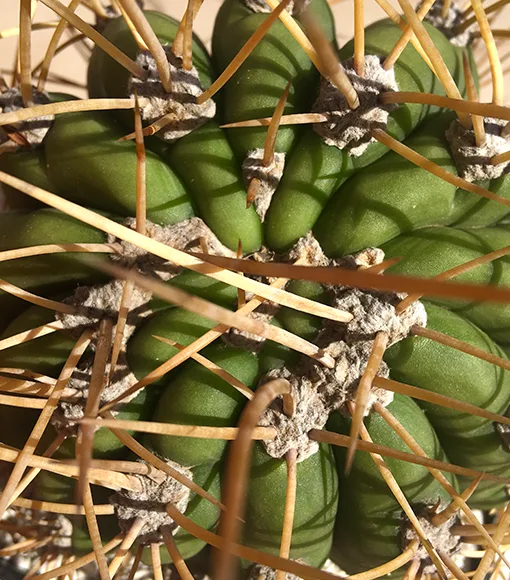
Stems: general diameter of 20–25 cm, 8–14 (up to 18) well-marked ribs, light green to glaucous color. Robust trunk, highly lignified and thickened at the base.
Areoles: large (2–2.5 cm), with 8–15 yellow to chestnut spines up to 10 cm long (central spines may be absent or poorly developed).
Flowers: nocturnal, white, 15–20 cm long and 13–15 cm in diameter, with dense hairs (white or brown) on the pericarp and floral tube. Very attractive to nocturnal pollinators.
Fruit: bluish, spherical or oblong, with tiny black seeds.
Professional Cultivation Requirements for Trichocereus terscheckii
Climate and Sun Exposure
Light: full sun, essential to avoid etiolation and ensure architectural development. Young specimens will prefer partial protection during the first summer.
Temperature: optimal range 20–35 °C; tolerates peaks over 40 °C and occasional drops to –4 °C (always in dry substrate).
Wind: very tolerant; its thickened bases provide stability even in exposed areas.
Substrate and Proper Planting
Extreme drainage: volcanic, sandy, or rocky soils. Recommended pot mixes: 60–80% volcanic gravel, pumice, or coarse sand, 20–40% fibrous organic matter.
pH: supports range 6–7.5. Avoid clays and saline soils.
Planting: always with the neck slightly elevated above substrate level to limit excess moisture near the base.
Professional Watering for Trichocereus terscheckii
Spring–summer: deep but very spaced watering; allow substrate to dry almost completely before repeating; in pots every 10–20 days depending on temperature and evaporation.
Autumn–winter: very light or no watering once temperature drops below 12 °C. Essential to keep dry during frosts.
Water quality: non-saline water preferred. If using hard water, acidify to pH 6.0 and periodically flush salts.
Recommended Fertilization
During active growth, apply balanced cactus fertilizers (low N, high K and Mg), for example 4-7-8 plus chelated micronutrients, every 3–5 weeks.
In poor areas, annual amendment with mature compost or humus on the surface is recommended, never burying near the neck.
Pots, Transplanting, and Cultivation Structure
Containers: deep and wide, preferably grooved or air-pot for lateral aeration. Extremely vigorous rooting: transplant every 2–4 years in young plants.
Transplants: best done in warm temperatures and vegetative rest. Minimize root damage and keep dry 5–10 days before first watering.
Advanced Propagation of Trichocereus terscheckii
Propagation by Cutting
Cut lateral branches (20–50 cm), always from lignified tissue. Beveled cuts and curing for 2–3 weeks in shade.
Rooting on barely moistened mineral substrate. First watering only after roots are observed (> 3 cm) or after 4–5 weeks.
Propagation by Seed
Ultra-mineral substrate: fine silica sand + perlite or pumice. Surface sowing, misting, and plastic cover until emergence (germinate in 10–21 days at 22–28 °C).
Ventilate progressively and limit excess moisture to avoid fungi.
Propagation by Grafting
Used specifically to rescue damaged shoots or accelerate production of valuable clones; recommended rootstocks: Trichocereus spachianus, Myrtillocactus, etc.
Pruning, Training, and Architectural Management of Trichocereus terscheckii
Usually does not require pruning; in landscaping, branches can be topped to encourage lateral branching. Perform in warm, dry weather, dust cut with fungicide.
Segment old columns to renew bases and obtain vigorous cuttings.
Common Pests and Diseases in Trichocereus terscheckii
Frequent Pests
- Mealybugs (aerial and root): periodic inspection and cleaning with isopropanol or potassium soap.
- Mites and red spider mite: only during heat waves and protected cultivation; control with light oils or release of natural predators.
- Snails and slugs: protect newly planted cuttings with physical barriers.
Common Diseases
- Rot (fungal and bacterial) — always linked to excess moisture: cut to healthy tissue, cure and dust with copper or sulfur, adjust watering.
- Anthracnose spots: improve aeration and apply contact fungicides only where authorized for ornamentals.
Common Problems and Solutions in Cultivation of Trichocereus terscheckii
- Etiolation: thin and yellowish stems due to lack of light. Gradually expose to full sun.
- Sunburn: corking after abrupt change to outdoors. Acclimate during the first 2–3 summers.
- Longitudinal cracking: typical after sudden watering in stressed plants. Balance frequency and amount of watering.
- Iron chlorosis: common in calcareous soils. Water with adjusted pH and apply chelated iron via irrigation.
Annual Professional Management Calendar for Trichocereus terscheckii (Southern Hemisphere)
- August–October: sowing, transplanting, first deep watering.
- November–March: active growth, fertigation, phytosanitary controls.
- April–July: progressive reduction of watering, dry overwintering, pruning and sanitation.
Key Differences Between Trichocereus terscheckii and Other Columnar Cacti
- Trichocereus pasacana: more numerous and less marked ribs, lower maximum height, slightly shorter spines.
- Trichocereus atacamensis: grows in colder and drier high plateau zones; smaller diameter.
- Carnegiea gigantea (Saguaro): adapted to the Sonoran Desert, finer and less robust spines, diurnal flowers.
Best Practices for Nursery Production of Trichocereus terscheckii
- Density: space plants to allow thickening (minimum 1 m between centers in field or nursery).
- Hygiene: disinfect tools, benches, and use new substrate in each propagation.
- Clonal selection: prefer specimens with vertical growth, straight ribs, low spination, and fast rooting.
Frequently Asked Questions (FAQ) about Trichocereus terscheckii
- How much light does it need? Constant full sun, vital for structural development.
- Does it tolerate frost? Yes, down to –4 °C always in dry substrate and adult plants.
- How often is it watered? Very spaced: every 2–3 weeks in heat, none in cold winter.
- How is it propagated? By cutting (recommended), also by seed (requires patience and sanitary control).
- Why does it yellow? Chlorosis due to high pH or calcareous soil. Correct irrigation pH and add chelated iron.
Summary Technical Sheet of Trichocereus terscheckii
- Height: 6–10 m (more in centenary specimens).
- Stem diameter: 20–25 cm; ribs 8–14 (sometimes more).
- Areoles: large; 8–15 spines, up to 10 cm long.
- Flowers: nocturnal, white, 15–20 cm; bluish fruits.
- Substrate: extremely draining, non-compact, pH 6–7.5.
- Watering: deep and very spaced; dry in winter.
- USDA zones: 9–11 (dry, tolerates zone 8b).
TRICHOLAND: Professional Production of Trichocereus terscheckii
At TRICHOLAND we propagate Trichocereus terscheckii selecting lines for vigor, perfect columnar structure, and rapid adaptation to semi-arid soil and climate. We offer mother plants, cuttings, wholesale lots, and personalized advice on professional management, nutrition, substrates, and pest prevention.
For monumental landscaping or reforestation of arid areas, terscheckii is the irreplaceable choice: longevity, sculptural stature, total hardiness, and low maintenance requirements. Our technical team is available to design fertilization programs, phytosanitary protocols, and density recommendations in the field adapted to each project.