
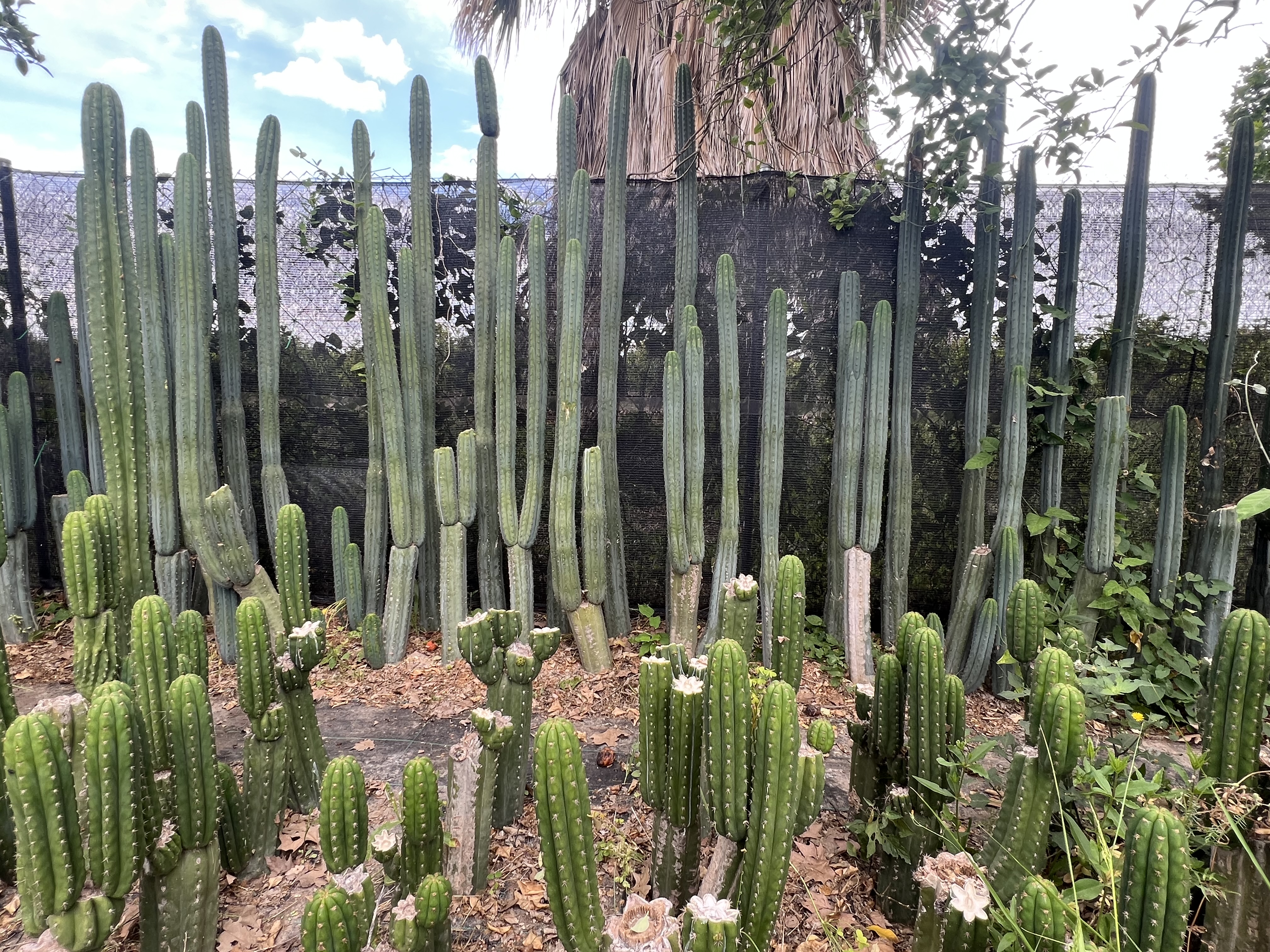
Guide to Fungal Diseases in Cacti: How to Prevent and Treat Them
Complete Guide to Preventing and Treating Fungal Diseases in Trichocereus and Columnar Cacti
Fungal diseases (caused by fungi) are one of the most common reasons for losses in cactus collections and nurseries. They usually appear when high humidity, poor air exchange, overly organic substrates, and/or wounds in the tissue combine.
In this guide, you will learn to recognize typical symptoms, the most common causes, and a practical prevention and treatment protocol to minimize relapses.
How to Recognize a Fungal Problem in Trichocereus Cacti
Although it is not always easy to distinguish fungi from bacteria or pests, there are quite typical signs:
- Brown or black circular spots that grow slowly.
- Sunken areas (necrosis) and corkiness (“corked” tissue).
- Soft rot at the base (neck) or roots, with a bad odor in advanced stages.
- Gray mold on the surface of wounds or soft areas, especially in cold and humid environments.
- Growth arrest and general discoloration when the damage is internal.
Important: a cactus can “scar” (cork) an old lesion. What is concerning is if the spot advances, soft tissue appears, or there are exudates.
Most Frequent Causes of Fungi in Columnar Cactus Cultivation
In cacti, fungi usually take advantage of stress conditions:
- Excessive watering or frequent watering without complete drying.
- Poorly draining substrate (too much peat, fine coconut fiber, or compacted soil).
- Pots without good aeration or trays with accumulated water.
- Poor ventilation in greenhouses or indoors (stagnant air).
- Low temperatures with high humidity, very typical in autumn and winter.
- Wounds from transplanting, hail, rubbing, insects, or cutting cuttings.
- Non-disinfected tools that transmit pathogens.
Common Fungi in Trichocereus and Their Impact on Cultivation
Without entering laboratory diagnosis, these are useful categories:
- Root and neck rot fungi: usually attack when there is excess moisture. The cactus softens from the base and may collapse.
- Vascular fungi: cause internal discolorations and progressive deterioration. Sometimes a brown ring is visible when cut.
- Opportunistic molds on wounds: appear on recent cuts or damaged areas if they do not dry well.
If the damage progresses quickly, there is a bad odor, or the tissue liquefies, act as soon as possible.
Prevention Protocol to Avoid Fungal Diseases in Cactus Nurseries
Prevention is usually 80% of success:
Suitable Substrate and Pot for Trichocereus
- Use a very draining substrate: high mineral content (pumice, volcanic gravel, perlite, coarse sand).
- Avoid very organic “indoor” mixes.
- Ensure drainage holes and do not leave water accumulated in trays.
Proper Watering to Prevent Fungi in Columnar Cacti
- Water only when the substrate is completely dry.
- In cold conditions, greatly reduce watering or suspend it depending on species and temperatures.
- Better a deep and spaced watering than frequent “sips.”
Ventilation and Light to Avoid Fungal Diseases
- Ventilate well: indoors, avoid corners without air movement.
- Sufficient light: weakened cacti get sick more easily.
Hygiene and Handling in Trichocereus Nurseries
- Disinfect tools (isopropyl alcohol) before and after each plant.
- Isolate new plants for 2–3 weeks to observe symptoms.
What to Do If There Are Already Signs of Fungi in Columnar Cacti
Step 1: Isolate and Evaluate the Affected Plant
Separate the plant to avoid contagion. Evaluate if the lesion is:
- Superficial and dry (better prognosis).
- Active, soft, or spreading (intervention needed).
Step 2: Stop Watering Immediately
If you suspect fungi, stop watering immediately. Keeping the substrate moist usually accelerates the problem.
Step 3: Check Roots and Neck if Applicable
If the problem seems to come from the base:
- Remove the plant from the pot.
- Remove all old substrate.
- Check roots: if there are black or soft parts, cut them back to healthy tissue.
Let dry in the air (bright shade, good ventilation) for 24–72 hours before replanting.
Step 4: Sanitize the Affected Tissue in Columnar Cacti
If the lesion is on the cactus body and advancing:
- With a clean tool, cut or scrape until reaching firm tissue.
- Disinfect the tool between cuts.
- Let the area dry and form a protective layer.
Step 5: Treatment with Fungicides for Trichocereus
The exact treatment depends on the country and the available product. Still, the general approach is:
- Contact fungicide (preventive): usually used on superficial lesions or as support after sanitizing.
- Systemic fungicide (curative): reserved for more serious or recurrent cases.
Always follow the product label (dose, frequency, compatibilities) and avoid treating in full sun or extreme temperatures.
Step 6: Replanting and Quarantine to Avoid Relapses
- Replant in new and sterile substrate, with a higher mineral proportion.
- Do not water for several days or even 1–2 weeks to allow healing.
- Keep the plant in quarantine and observe if the spot stabilizes or continues growing.
Typical Case: Rot at the Base of the Cactus and How to Save It by Cutting
If the cactus is soft from the bottom, often the most effective is:
- Cut above the affected area until clean tissue is visible (without discoloration).
- Let the cutting scar in a dry and ventilated place.
- Root in a very mineral substrate, with minimal watering at the start.
Quick Checklist to Avoid Fungal Diseases in Trichocereus and Columnar Cacti
- More mineral and draining substrate.
- Water only when the substrate is 100% dry.
- Real ventilation with moving air.
- Disinfected tools.
- New plants in quarantine.
With these changes, most fungal problems in cacti are drastically reduced and, when they appear, are controlled much earlier before they advance.