
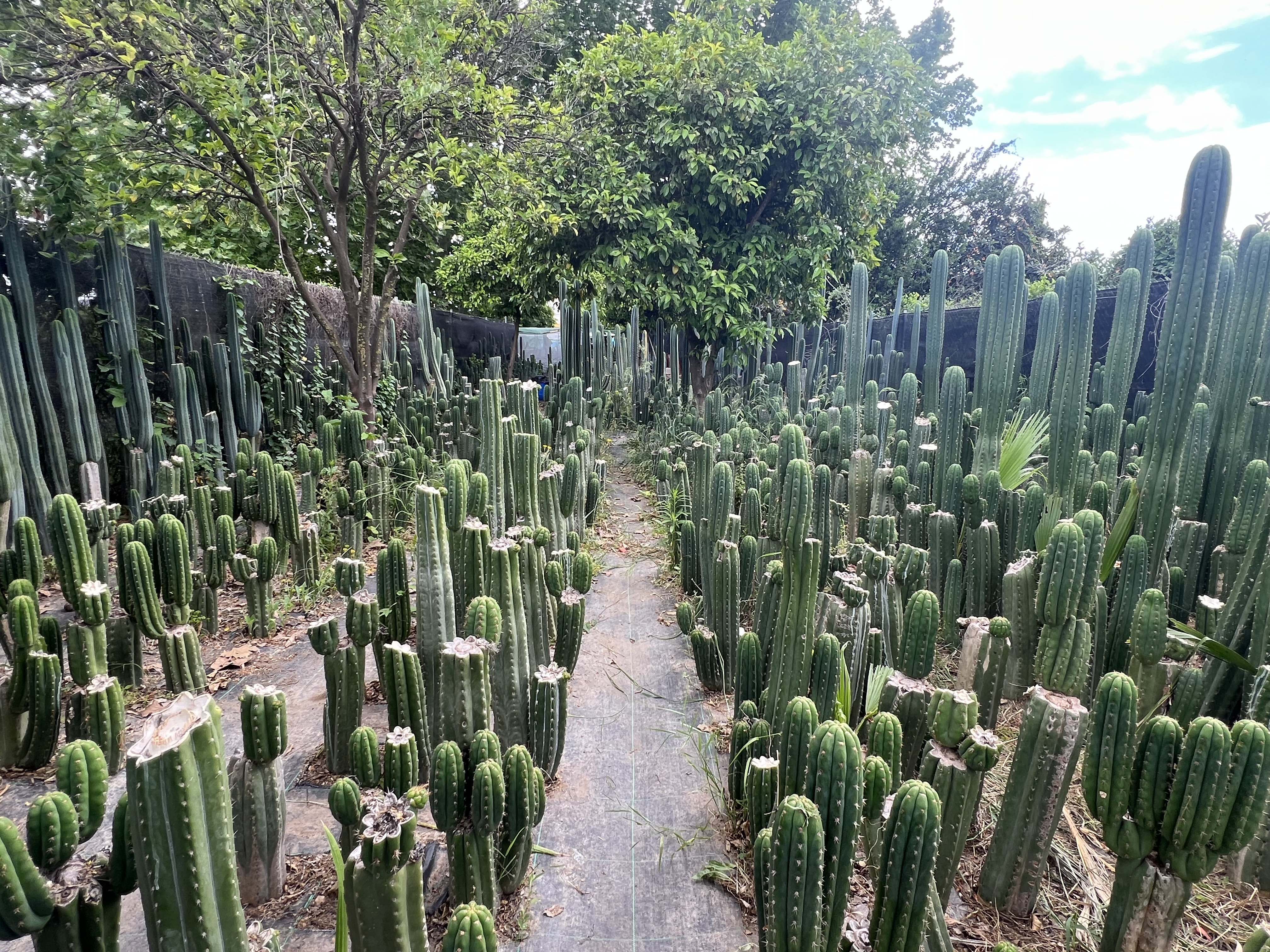
Practical Tips for Cultivating Trichocereus in Large Quantities
Practical Tips for Growing Trichocereus in Large Quantities
Growing Trichocereus, better known as San Pedro cactus, is a practice that not only keeps alive an ancient tradition of Andean cultures but also offers a fascinating gardening and agricultural experience. Below are practical tips for cultivating Trichocereus on a large scale and ensuring the success of your harvest.
1. Selection of Trichocereus Varieties for Extensive Cultivation
Trichocereus macrogonus var. pachanoi, a synonym of the famous San Pedro, is a fast-growing cactus native to the Andes, found in countries such as Ecuador, Peru, and Colombia, and also cultivated in other parts of the world. When choosing varieties for large-scale cultivation, it is important to consider the climatic and soil conditions of your region.
Characteristics of Trichocereus macrogonus var. pachanoi:
- Height and Shape: It can grow between 3 to 6 meters tall with multiple branches. Its columnar shape and ability to regenerate from the base or around broken branches make it ideal for extensive cultivation.
- Flowers and Reproduction: It produces large white flowers that open at night and last for two days, allowing a prolonged pollination period.
2. Soil Preparation for Trichocereus Cultivation
Ensure the soil is well-drained to avoid waterlogging that can lead to fungal diseases. Opt for a mix that includes coarse sand and pumice stone. If you decide to grow outdoors, choose a field with a slight slope to facilitate natural water drainage.
3. Propagation of Trichocereus Cactus
Propagation of Trichocereus is simple through cuttings:
- Cuttings: Cut a mature branch and let it dry for several weeks to allow a callus to form on the cut end. Then, plant the cutting in a suitable substrate.
- Seed Sowing: Although slower, this technique is useful for obtaining a large number of plants. Make sure to maintain consistent moisture without saturating the substrate.
4. Watering and General Care for Trichocereus
- Watering: During the growing season (spring and summer), water the cacti every two to four weeks, reducing watering during the dormant period (autumn and winter). Excess water is more harmful than lack of it.
- Sunlight: Trichocereus thrives under bright light, but prolonged exposure to intense sun can cause burns. Provide partial shade, especially during extreme heat.
5. Pest and Disease Control in Trichocereus Cultivation
Large-scale cultivation requires constant monitoring to prevent infestations of pests such as scale insects and aphids. Use horticultural oils or organic insecticides to control them. Regarding diseases, be cautious of fungi that may appear due to excess moisture. Crop rotation and proper cleaning between seasons are crucial.
6. Harvesting and Traditional Uses of Trichocereus Cactus
Once mature, Trichocereus segments can be harvested. Traditionally, the San Pedro cactus has been used in Andean medicine and religious rites for over 3,000 years. The recognition of these practices as cultural heritage in regions such as northern Peru highlights its historical and cultural importance.
Conclusions on Responsible Trichocereus Cultivation
Large-scale cultivation of Trichocereus not only requires detailed care and consideration of climatic and soil factors but also offers a connection to a rich cultural tradition. With these practical tips, you will be well prepared to undertake a successful Trichocereus cultivation project that can provide ornamental, cultural, and economic benefits.
Always remember to stay informed about local regulations regarding the cultivation of plants that may contain psychoactive substances. Responsible cultivation ensures their preservation and cultural appreciation.