
Trichocereus in Desert Climates: Ancestral Cultivation Techniques
Trichocereus in Desert Climates: Ancestral Cultivation Techniques
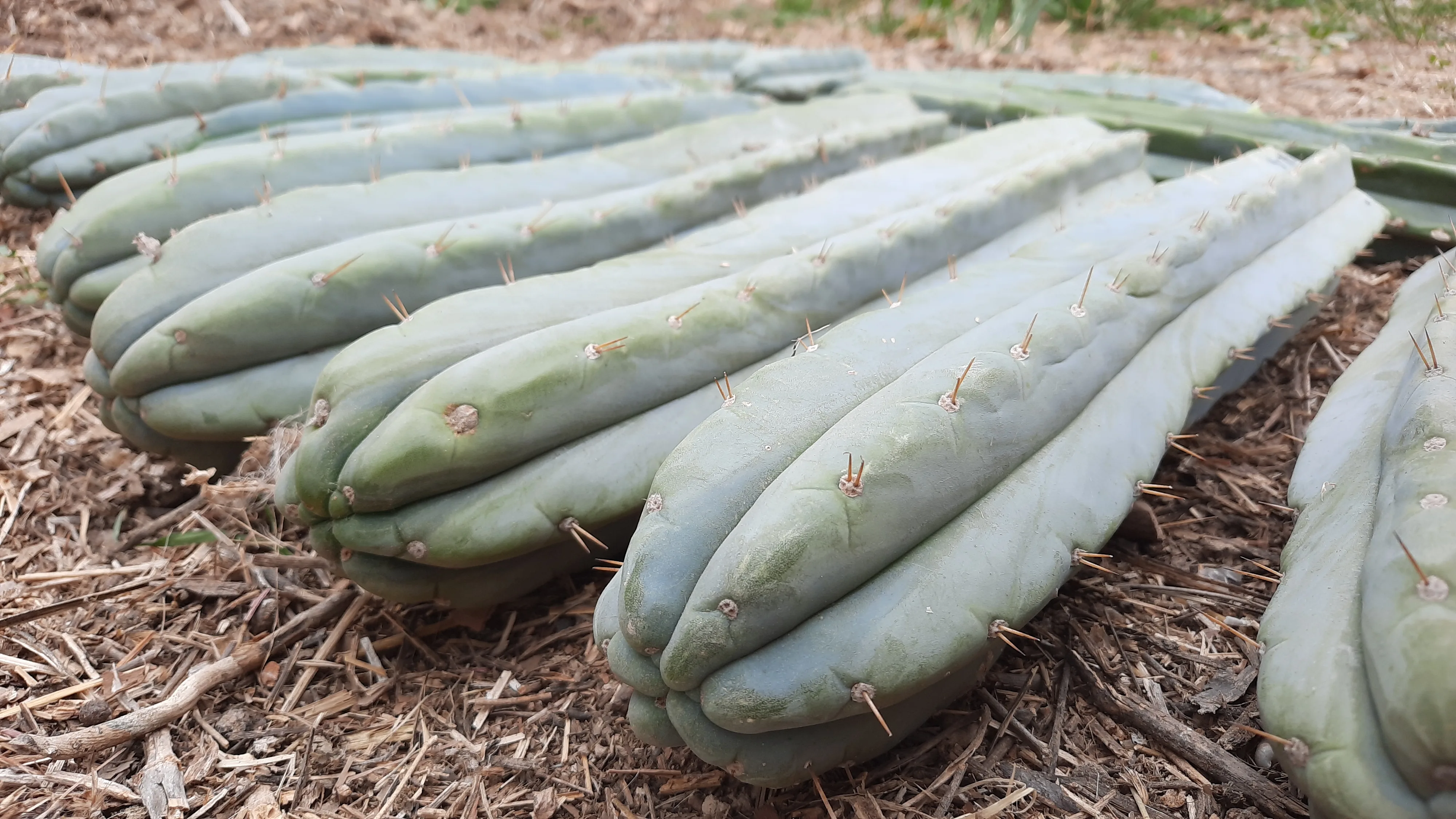
Trichocereus (separated from Echinopsis by many contemporary authors based on morphological and genetic criteria) are South American columnar cacti—native to Bolivia, northern Chile, Ecuador, and Peru—especially suitable for xerogardening and production in arid environments. Their CAM physiology, architectural form, and rapid growth of some taxa (e.g., T. macrogonus var. pachanoi, syn. Trichocereus pachanoi) make them ideal candidates for projects in coastal BWn deserts (with fog), warm interior deserts (BWh), and cold, dry high Andean plateaus.
This document compiles an advanced technical guide to establish, manage, and scale Trichocereus crops in desert climates, integrating proven ancestral techniques—terracing, raised beds and sunken gardens, acequias and galleries, amunas-type water recharge, fog harvesting, volcanic sand mulching, and micro-basins—with modern protocols for substrate, irrigation, nutrition, and plant health.
Physiological Fundamentals: Why Trichocereus Thrives in the Desert
-
CAM Photosynthesis: stomata open at night and close during the day, storing CO₂ as malic acid for daytime use. This drastically reduces evapotranspiration and allows growth with very little water under high radiation and wind conditions.
-
Architecture and Tissues: succulent stems, waxy epidermis, and pronounced ribs facilitate water expansion/contraction; extensive shallow roots capture brief moisture events.
-
Wide Thermal Range: optimum 18–30 °C; tolerance to dry heat spikes; relative inactivity below 10–12 °C.
Challenges of Cultivation in Deserts
-
Water: scarcity, high EC and alkalinity; erratic pulses (intense rain events); coastal fog without effective precipitation.
-
Soil: poor in organic matter, very draining or saline-sodic with crusts; high surface mineralization rates and salt mobilization.
-
Climate: extreme radiation and wind; large thermal amplitudes; radiative frosts in high deserts.
Ancestral Techniques Applied to Trichocereus
Traditional agricultural engineering in arid regions offers low-cost, highly resilient solutions. Below is how to adapt them for professional Trichocereus cultivation.
1) Andenes (Terraces) and Hillside Management
The Andean andenes redistribute runoff, reduce erosion, and allow deeper, more stable soils on slopes. For Trichocereus:
-
Construction: dry stone walls 50–80 cm high; raised growing bed 30–60 cm with mineral mix; slight slope (1–2%) toward an internal drainage channel to avoid waterlogging.
-
Function: modulate water pulses, reduce nutrient leaching, buffer winds, and provide thermal mass (stones store daytime heat and mitigate frosts).
-
Implementation: space plant rows 80–120 cm apart; include “service benches” for work and fertigation.
2) Raised Beds and Side Ditches (Adapted Waru Waru)
Waru Waru (raised beds alternating with channels) stabilize temperatures and manage water. Adaptation for cacti:
-
Raised bed 50–80 cm wide × 25–40 cm high; side ditches 20–30 cm wide to capture occasional rain or condensed fog and dissipate excess salts.
-
Benefits: high root aeration, rapid drainage, milder nocturnal microclimate; possibility of salt flushing directed to ditches.
3) Sunken Gardens and Micro-basins (Huanchaques and “Waffle Gardens”)
Sunken gardens from the northern Peruvian coast and “waffle gardens” of the Zuni in the U.S. Southwest reduce wind, capture fine runoff, and concentrate moisture:
-
Cells 60–100 cm diameter and 15–25 cm deep, with compacted edges or semicircular stone walls facing windward.
-
Use: ideal in windy, sandy deserts; accumulate dew/fog and limit water loss by convection.
-
Precaution: in heavy soils or torrential rains, slightly raise the cactus collar above the bottom level to avoid neck waterlogging.
4) Acequias, Galleries, and Water Recharge (Qanats and Amunas)
-
Acequias: gravity-fed water distribution with turns and gates; useful for filling cisterns and low-pressure drip irrigation in Trichocereus beds.
-
Qanats/galleries: underground conduits that prevent evaporation; feasible on farms with shallow aquifers and gentle slopes.
-
Amunas (mamanteo): diversion of floodwaters to permeable zones for deferred recharge; raises base flows during dry periods, feeding springs and irrigation wells.
5) Fog Harvesting and Hills
-
Fog catchers: vertical meshes on ridges or fog corridors; typical efficiencies of 2–10% of moisture content. Harvested water feeds reservoirs for targeted nursery or young line irrigation.
-
Placement: orient perpendicular to prevailing winds; lower gutter to drum/storage pit; periodic mesh maintenance.
6) Volcanic Sand Mulching and Mineral Mulches (Inspired by La Geria, Lanzarote)
-
Volcanic sand mulching: 5–10 cm layer of lapilli/pumice/volcanic gravel (2–8 mm) over substrate. Reduces evaporation, captures dew, suppresses weeds, and stabilizes temperature.
-
Protected pits: “pit” excavation with a half-moon stone wall facing prevailing wind, mimicking volcanic landscape viticulture to shield from wind and capture condensation.
Professional Site Design in Desert
Land Selection and Preparation
-
Topography: prefer ridges and gentle slopes with natural drainage; avoid saline depressions (solonchaks).
-
Desalination and Structure: if soil EC (saturated paste) >2 dS/m or high SAR, incorporate agricultural gypsum (2–8 t/ha depending on analysis) and perform targeted leaching toward sacrificial ditches.
-
Wind: install porous windbreaks (40–60% mesh or native xerophytic hedges) upwind; effective height ≈ 10–12× barrier height.
Beds, Pits, and Spacing
-
Spacing: 0.8–1.2 m between plants in row; 1.2–1.6 m between rows for management. For landscape hedges, 0.6–0.8 m in zig-zag.
-
Configuration: choose according to soil and climate: raised bed with side ditch (sandy soils and occasional heavy rains), sunken garden (windy sands), or terrace with stone wall (slopes).
Substrate and Soil: Recipe for Pot and Field
In Container (Nursery or Planters)
-
50–70% mineral fraction: pumice/scoria/pozzolana 2–8 mm + 10–20% washed coarse silica sand.
-
30–50% organic fraction: fibrous coconut or blond peat + 10–20% very mature, well-sieved compost.
-
Amendments: dolomite 2–4 g/L (Ca/Mg and pH), Trichoderma/mycorrhizae, 2–5% washed biochar to improve CEC.
-
Target pH: 5.8–6.5; irrigation EC: 0.8–1.2 mS/cm during active growth.
In Soil (Desert)
-
Hole improvement: mix 30–50% of volume with volcanic aggregates (2–12 mm) and 10–15% mature compost; top with mineral sand mulch 5–10 cm.
-
Salinity: prioritize generous establishment irrigations during first 2–3 events to push salts out of the rhizosphere toward ditches.
Desert-Focused Irrigation
-
Strategy: deep and spaced irrigations with drying periods of 50–80% of available water volume. In pots: 1 irrigation every 5–12 days in summer depending on radiation and wind; nearly dry in cold winter.
-
Drip: 2 L/h emitters; 1–2 per plant in the first year; place 10–15 cm from stem to promote lateral roots.
-
Water quality: ideal EC <1.0 dS/m and moderate alkalinity. If hard water, acidify to pH 5.8–6.2; schedule salt flushes every 6–8 weeks (2–3 pore volumes).
-
Indicators: daily stem contraction (0.5–2% diameter) and rib turgor loss—advance irrigation; edema or glassy tissues—delay irrigation.
Low-Input, High-Resilience Nutrition
-
Formulation: low N and high K with chelated micros (e.g., 3–5–7 to 4–7–8) providing 50–100 ppm N per application every 2–4 irrigations in warm season.
-
End of summer: reduce N; prioritize K and Si (potassium silicate) to mature tissues and improve abiotic tolerance.
-
Corrections: Fe-EDDHA for chlorosis in hard/high pH waters; gypsum for sodic soils; highly stabilized organic amendments in microdoses.
Microclimate: Managing Radiation, Wind, and Frost
-
Temporary shading: 30–50% mesh on juveniles or after transplant for 2–4 weeks; gradually remove.
-
Walls/stone barriers: dry stone west-facing to soften afternoon sun and act as thermal mass against radiative frosts.
-
Frosts: safe cultivation in USDA zones 9a–11. In high deserts, ensure dry soil before cold waves; breathable night covers on juveniles; avoid irrigation before frost.
Propagation and Establishment
Cuttings (Preferred)
-
Cuttings 20–40 cm with disinfected tool; bevel to drain.
-
Curing vertically for 10–21 days in bright shade (longer in humid climates; dust with sulfur).
-
Rooting on very mineral, barely moist substrate; first moderate irrigation upon root appearance (2–4 weeks in warmth).
Seed
-
Substrate fine and sterile; superficial sowing; high humidity under cover; 22–28 °C; diffuse light.
-
Management: progressive ventilation from 2–3 weeks; first very diluted fertilization at one month.
Grafting (Advanced)
-
To accelerate seedlings or rescue material; rootstocks: vigorous Myrtillocactus geometrizans or Trichocereus.
Plant Health in Deserts
-
Scale insects (aerial and root): periodic inspection of areoles/collar; 70% isopropyl alcohol, potassium soap, and light oils; biological control in greenhouse.
-
Red spider mite: common with low RH; preventive oils, summer morning showers outdoors, predatory mites in production.
-
Rot diseases: associated with cold substrate irrigation or waterlogging; sanitation to healthy tissue + sulfur/copper on cuts and irrigation management.
-
Salts: marginal necrosis or corky bands from salt accumulation; apply flushes and improve leaching toward ditches.
Practical Protocols Based on Ancestral Techniques
Protocol A: Raised Bed with Saline Ditch
-
Trace rows along contour lines.
-
Raise 30–40 cm bed with mineral mix; apply 5–10 cm sand mulch.
-
Excavate side ditch (20–30 cm) draining to evaporation/sacrificial pit.
-
Drip irrigation on bed; every 6–8 weeks perform leaching irrigation draining to ditch.
Protocol B: Sunken Garden with Half-Moon
-
Open cell 80–100 cm diameter × 20 cm deep; raise a central “island” 5–8 cm for cactus collar.
-
Build half-moon stone wall windward (40–60 cm high).
-
Sand mulch and planting; spot drip or deep, spaced manual irrigations.
Protocol C: Andean Terrace for Hillside
-
Dry stone wall, internal drains, and gravel floor at wall base.
-
Growing layer 40–60 cm; Trichocereus rows 1.2–1.6 m apart.
-
At base, collection acequia and salt flushing point.
Protocol D: Fog Harvesting
-
Install 3–6 m wide collecting mesh on ridge; orient to prevailing winds.
-
Lower gutter to reservoir; filter and use for nursery/establishment.
-
Complement with protected pits and mineral mulches to maximize micro water input.
Management Calendars (Adapt by Hemisphere)
-
Mild winter BWn (fog coasts): very sporadic irrigations; maintenance of structures, root scale control; leverage fog harvesting.
-
Spring: transplanting, drip installation, mild fertilization; sun acclimation.
-
Summer: growth peak; deep and spaced irrigations; complete nutrition; scheduled salt flushes.
-
Autumn: reduce N, prioritize K/Si; space irrigations; check bed/ditch structure before rains.
Common Mistakes and How to Avoid Them
-
Waterlogging “sunken gardens” in clay soils: raise cactus collar and/or opt for raised beds.
-
Ignoring salinity: monitor drainage EC; schedule flushes and drains.
-
Transplants without acclimation: shade 2–4 weeks and prudent irrigation.
-
Light, frequent irrigation: favors shallow roots and scale insects; prefer deep, spaced irrigations.
Summary Technical Sheet for Desert
-
Light: full sun after acclimation; juveniles with temporary 30–50% mesh.
-
Temperature: optimum 18–30 °C; dry when cold; avoid irrigation before frosts.
-
Substrate: very draining; pH 5.8–6.5; superficial mineral sand mulch.
-
Irrigation: deep and spaced; ideal water EC <1.0 dS/m; periodic flushes.
-
Nutrition: low N, high K, with micronutrients; Si for resilience.
-
Structures: raised beds/terraces/sunken gardens, windbreaks, mineral mulches, fog harvesting.
Taxonomic and Identification Notes
-
Genus: Trichocereus (many sources treat it separately from Echinopsis in modern circumscription).
-
Key species and varieties in cultivation: T. macrogonus var. pachanoi (fast, low to medium spination), T. macrogonus var. macrogonus (more spiny), T. peruvianus s.l., among others.
-
Flowers: large, white, nocturnal, fragrant, with hairy floral tube; oblong fruits with white pulp and black seeds.
Use Case: Establishment in Coastal Fog Desert (BWn)
-
Phase 0: assess winds and fog corridors; locate 2–4 fog catchers/ha on ridges.
-
Phase 1: trace beds along contour; raise beds with side ditch; install porous windbreaks.
-
Phase 2: plant in sand-mulched pits; low-pressure drip; temporary shading.
-
Phase 3: deep irrigations and targeted flushes; moderate nutrition; integrated scale control.
-
Phase 4: monitor drainage EC, irrigation pH, stem contraction, and rib growth to adjust management.
TRICHOLAND: Wholesale Production and Consulting for Desert Projects
At TRICHOLAND, we select Trichocereus lines for vigor, uniformity, and abiotic stress tolerance, with calibers suitable for xerophytic landscaping, public projects, and collections. We provide:
-
Wholesale lots of rooted plants and certified cuttings.
-
Technical design of raised beds, terraces, sunken gardens, and fog harvesting and water recharge systems adapted to your site.
-
Fertigation plans for hard water, salinity control, and flushing protocols.
-
Plant health and integration of biological control in greenhouse and field.
If you need a turnkey establishment or a transition plan from conventional irrigation to adapted ancestral management, our agronomic team supports you from design to operation, maximizing resilience and reducing inputs in desert climates.